Showing posts with label tips. Show all posts

Wednesday, January 26, 2011

How the HECK do I recycle THAT?

Hiya!

With the holidays having come and gone, new-year cleaning/reorganizing has begun and with that I have come up with a lot of things made from plastic or toxic materials that I REAAAAALLY don't want to put in the landfill. So I have taken it upon myself to find out if there is any hope for keeping these things in the society and out of the earth. So...here is a list of some hard to recycle items and their (possible) solutions. And this is only a partial list b/c calling all these companies takes FOR-EV-ER!

I will be distinguishing between "recycle" and "reuse" here because they are very different in nature.  Recycling does take some resources but it also turns useless things like old computers into useful things like new computers. Reusing takes little to no earthly resources (fuel, electricity etc) and keeps the products in the world they way they are. However, there's only so many hanger-mobiles or CD-scarecrows you can have before you need to recycle THOSE too!


Recycle: literally "to cause to pass through a cycle again" according to dictionary.com. But it also means "to alter or adapt for new use without changing the essential form or nature of".

So, can you recycle...?
  • CDs/DVDs? YES! I used to work for the CU Engineering Center doing distance learning and I remember scratching CD after CD then putting them in a box to be shipped off to some big CD recycling place somewhere. So I was thinking...are those places still around? Because just this morning I noticed my gigantor CD binder filled w/ burned CDs many of which I'll probably never listen to again (thank you, Apple...) and thought "Gee...those guys are going to just sit in my house till I get tired of them but THEN where will they go?" The CD Recycling Center is just one place online I found that you can ship your CDs and cases to. Of course, this does cost money, in both the shipping costs as well as the $2.00 donation per shipment they ask to help keep their services free. But hey, $2 is better than $5 or $10 or $20 or $100 right?  So I still think it's a win! There's also a new program in which some bigger Best Buy stores are accepting CDs and DVDs w/o cases to recycle. I have a lot more info on this so check out my previous post: Holy Moly! It's Best Buy!
  •  Computers - Best Buy!
  • Metal Hangers?  - YES! My local recycling joint, Eco-Cycle, will take them in their scrap metal bin. 
  • Plastic Hangers (the cheapo kind from clothing stores)? (you know, the ones that say size S on the top?) - Maybe. I've heard that some supermarkets will but I can't find any in my area that do. But you can reuse them (I gave them to my mom for her belly dance stuff)!
  • VHSs - Best Buy!
  • Plastic Bottle Lids - If you read one of my earlier posts plastic lids, you'll find out that plastic is scary. I'm still not sure on this one, I did find Preserve Products which recycles #5 and 6 plastics and toothbrushes, but I'm not sure where lids fall on the number scale. But this company is cool b/c they make stuff back out of the plastic! Also, theoretically, Aveda used to do these, but I'm not sure of the status now, so give 'em a call to find out!


Reuse: While "recycle" means to adapt and change a product, "reuse" means "to use again" or basically "repurpose" a item without changing its form or its nature. 

Can you reuse...?
  • Air-filled Packing bags - YES! My place that takes the peanuts will also take the air-filled bags.
  • CDs  - YES! Coasters! But seriously...apparently they work great as "scare crows" in gardens that keep the birds away. We'll see...
  • Packing Peanuts/Plastic Loose Fill? - YES! Please see my previous post: These Peanuts Don't Make Good Butter.
  • Plastic hangers from clothing stores? (you know, the ones that say size S on the top?) - YES! Some thrift stores will take these like the Salvation Army but make sure to check first b/c if they don't use them, they'll just throw them away. You can also do crafts with these like baby mobiles and, if you're really talented, knitted hanger covers
  • VHSs - these guys are tough to deal with. The best thing to do is find out if places near you (schools, libraries, homeless shelters etc.) are not equipped with DVD equipment and you can donate them there. Or, you can crochet things from their tape. haha!
  • Plastic Bottle Lids: My cat shelter, the Rocky Mountain Siamese Rescue does take them to make cat toys out of and you can use them in all kinds of fun crafts. This probably merits its own post sometime in the future....


Here are some good resources to check out for hard to recycle items:
  1. How Can I Recycle This? Note: this is UK site so some info might be different, so research first!
  2. Eco-Cycle, Western Disposal, Waste Management (or your local recycling place website)
  3. Freecycle "The Freecycle Network™ is made up of 4,904 groups with 8,075,584 members across the globe. It's a grassroots and entirely nonprofit movement of people who are giving (and getting) stuff for free in their own towns and thus keeping good stuff out of landfills."
  4. The InterWebz - I know you're probably like...WTF? Of course I know this one, I'm reading your blog, aren't I? But that is where I got all of my info in this post. Oh yeah, and I called a f-load of stores. =)
*chokegasp* OMG....finally done! Enjoy! *shudder*

    Monday, January 10, 2011

    Lucky #7 - 7 things to reuse, 7 things to avoid

    I just found this site called Greenopolis and while I haven't explored it fully, I found two fun and useful articles for the time being.

    #1:

    The Magnificent Seven: 7 Top Materials To Use And Recycle!


    For millennia we used leather, wood, clay, and stones along with animal and vegetable materials for nearly everything. When we threw something “away”, it went away- really back into the natural systems it came from.

    But 7 billion of us can’t rely strictly on grown materials, and most of our modern materials don’t go away very easily. Does that mean we should not use them? Not at all. We just need to get as smart as Ma Nature and learn to reuse and recycle those materials again and again. These Top 7 materials are safe, recyclable and just work really well for so many things. They include 2 metals, 3 plastics, and 2 natural materials. Here’s my list:
    1. Steel. Steel is probably the most recycled material on earth- about 70 % of all steel is recycled and nearly all the steel you use has recycled steel in it. Works great because of its strength and malleability. I’m a big fan of steel roofs, among other things.

    2. Aluminum. Abundant in nature, strong but lighter than steel, and it doesn’t rust. Aluminum is what caps the Washington Monument because it was once so prized. But mining and smelting aluminum is very energy intensive and polluting. That’s why recycling it is so important. Right now about 50% is recycled- we need to get that up into the 90% range like gold.

    MORE...

    What I want to know about this article is how it mentions recycling bottle lids. If anyone knows how to do that or can point me in the right direction, I'd be grateful! Sometime soon I will research this myself.


    #2


    7 Deadly Sins: 7 Materials To Avoid

    In the Church Of Green Living, some sins are more deadly than others.


    Little sins like forgetting to recycle paper can be overlooked, unless you are a newspaper publisher. But some are to be avoided at all costs. Here’s a list of 7 substances that cause real problems in the environment, and that we can avoid by taking a few simple steps in our lives.


    1. 2Polyvinyl Chloride, aka PVC, aka Vinyl aka #3 plastic. We’ve all got some vinyl in our houses, on furniture clothing, plumbing pipes- it’s the third most common plastic. But it usually has bad stuff that can leach out of it, like diethylhexyl phthalate, which is banned in Europe, vinyl chloride and dioxins.  The U.S. Green Building Council states that the "risk of dioxin emissions puts PVC consistently among the worst materials for human health impacts”.  You probably don’t have to strip off your vinyl siding, but avoid toys (including sex toys) with PVC. You don’t want it in or near you or your kid’s body.
    2. 2Polystyrene, aka Styrofoam, aka #6 plastic. Polystyrene is not easily recycled because of its light weight (especially if foamed) and its low scrap value. Discarded polystyrene does not biodegrade for hundreds of years. Commonly used in coffee cups and clamshells for food, it contains benzene, a known carcinogen, and while the FDA claims it is safe, there are studies concerning polystyrene containers used for food packaging which find that styrene oligomers migrate into the food and may increase thyroid hormone levels. It’s your call if you want your hot coffee or entrĂ©e served up in polystyrene. I avoid it.
    MORE...

    In this article it's these first two that bother me the most.  Partially for their poisoning rap but also (and, let's face it, MOSTLY) for the fact that I'm so good about not throwing away all kinds of other stuff, including stuff that breaks down faster (food --> composting) but I still get styrofoam take out containers and plastic crap off of the kid's toys. I think my next big goal is going to be to figure out how to cut back on using these items. NO STYROFOAM! grrrr....

    Wednesday, November 3, 2010

    Cloth Diapers - Guest Blogger!

    Diapers. Thousands, no MILLIONS, of them are probably sitting in landfills as we speak. Think about it....Ok, who's grossed out now? I know that I am!  For not being pregnant or a mom of a kid in diapers, I find this topic fascinating! It just seems like one of the most icky forms of waste and the (continuing) existence of cloth diapers shows that there are alternatives to help the environment gives which in turn, gives me hope for the future.  So let's find out why cloth diapers are FULL of waste but not wasteFUL

    Today, I am pleased to present my very first guest blogger, the lovely Jen E. from mommablogsalot.com. Jen blogs (a lot) about family, family products and green-friendly products as well as a host of other topics. She has written up an exciting account of her experience breaking into the cloth-diapering world as well as a list of links for more info. I love her practical and non-preachy approach to this topic, especially her unashamed use of the occasional disposable diaper. This proves that we do what we can which is leaps and bounds more than if we didn't do anything! (And being kind of a girly girl, I love the idea of pretty diaper covers!)

    *******************

    Why Cloth Diapers? Thoughts on diapering from the not-so fanatic cloth diapering mom

    Jen's daughter helping with the now-famous cloth diapers!

    I think people come to cloth diapering for different reasons. Maybe you are hoping to lead a more environmentally friendly lifestyle, save some long term money (by age 2 1/2 babies use about 7,000 diapers - costing about $2,000. Comparatively, we’ll spend about $500 or less on cloth diapers total) or avoid the weekly or monthly trips to the store to buy diapers. I know my husband loves never having to go out in the middle of the night or in bad weather to buy diapers last minute. All of these are great reasons to consider cloth diapering!

    Of course it’s not all sunshine and roses. Nothing that smells like poop is ever an entirely happy story, if we’re going to be honest. I don’t think I liked cloth diapering per say for at least six months - and I’ve heard this is normal but I sort of wish someone had mentioned it to me when I was getting started. After using disposable diapers with my first child for the last three years, the transition to cloth with my second child was a little bit of a culture shock. The smells were different, the work was, yes, a little bit harder. And I was already tired, sleep deprived and grumpy.

    But my husband, who wasn’t in the  throes of post pregnancy hormones, convinced me to stick it out a while longer and before I knew it, cloth diapering had become a normal part of our life that I now wouldn’t trade for anything. The cost savings is exponential, the work just isn’t that hard and the diaper covers are seriously cute.
      
    Cute diaper cover!

    There are options to choose from as cloth diapering has become awfully trendy over the past few years. Find a style that works for you : prefold / diaper covers, all-in-ones, pocket diapers and even hybrid styles like the GDiapers - you have a lot to choose from! We use mostly prefolds with a few pocket diapers on hand as back ups when I’m running behind on my laundry. Mix and match and find a method that works for you - there is no right or wrong answer here!

    If you are considering cloth diapers but are still on the fence, here are a few things to consider:

    ·           First, understand that cloth diapering need not be all or nothing. Try it for a few months to see how you like it. Traditional prefold diapers can be used as spit up cloths if you decide to throw in the towel. Why not buy one or two covers and a 6 pack of diapers and give it a shot before going all in?
    ·           We use cloth at home but disposables when we are on the go. Some people use cloth while out of the house, bringing a wet bag along with them, but I opt for convenience first and find the amount of diapers we end up using on the go isn’t very much in the long scheme of things (we buy disposables once every couple of months as opposed to weekly).
    ·           Make your diapering schedule work for you. How often do you want to do laundry? Your baby will use about 8-10 diapers a day so if you only want to do laundry every other day, you’ll need at least 20 diapers - buy more diapers and a big diaper pail if you hope to do laundry less. We have about 2 dozen diapers for good measure and I wash diapers every 2-3 days. And remember if you fall behind on laundry, you can always throw your baby in a disposable while you get the laundry done - once in a blue moon (or more) won’t hurt anyone.

     
    ·           You might consider a diaper service if you have one in your area. You might not end up saving any money that way, but if the environment is your first concern, this is definitely an option and perfect for anyone who doesn’t have the time to get the laundry done themselves.
    ·           Don’t forget accessories! Just like in fashion, they will be your best friend. If you use prefolds - get yourself a package of snappis instead of the dreaded diaper pins and please please please pick up some diaper liners to ease in the clean up of poopy diapers once your baby is on solids (before solids, poopy diapers are water soluable, just toss the soiled diaper in the wash and all will be well). Liners are a god send and can be flushed or tossed quickly. You might also look into a diaper sprayer - I know a lot of people use and love these!
    ·           There are a lot of accessories, detergents and options out there. Some cost more than others. Some work better than others. Just find what works for you and give it a shot. Change your mind as you get there and figure out what you like. For a diaper pail, we honestly just use a big trash can and wash it when we need to. They make cute diaper pail liners that can also be used on the go - but to me that just seemed to make things more complicated instead of easier. For detergent, you can use any laundry detergent that has no dyes, scents or softeners. We use whichever “free and clear” detergent is on sale that week. They all work fine. We also use a laundry booster like borax for good measure.

    Here are some cloth diapering links to check out:
    •   Say goodbye to diaper pins and hello to the snappi - makes diaper changes a breeze!
    • Imse Vimse is without a doubt our favorite diaper liner.
    • A diaper sprayer which connects to your toilet for easy clean up
    • Simple Mom is a great recource for anyone looking to try cloth diapering. She has loads of articles with tips on choosing diapers, cleaning them, setting up a diaper changing area, shopping for diapers and accessories, etc.

     Even your kids will love the cloth diaper!

    Wednesday, October 20, 2010

    Thinking About Water

    In the past few days, I've been thinking a lot about water. It started a few months ago when I read a glamour article about the grandaughter of that great sea explorer whose name I've forgotten. But she is a water activist now and is trying to teach people how to conserve water.It encouraged me to keep doing what I've been doing as far as pouring leftover drinking water (glasses of water etc) into my plants or the cat/dog bowl, but didn't really take hold of my thoughts. It was striking to me, however, and led me to muse about it now and again.

    Then, yesterday, I read some articles about people in New Delhi around the Yamuna river who are upper-middle and middle class and don't even have consistent running water (even though they have pipes). 20-40% of New Delhi's water is lost from leakage due to poor pipe construction and old pipes. This woman has to be even more careful with her water usage and consistently reuses it for other things. She also pays over $45 US dollars (a week?) for 3 different sources of water - running water bill, tanker truck and neighborhood drilled well. She talked about how after she wakes up at 6a.m. she spends her day worrying about how she's going to get water that day.

    Then you've got all the lower-middle and lower classes who have no access to running water. The women have to spend their days waiting for water tankers and fighting over water. One woman had to quit her job just so she could wait for water. And even then, a lot spills out into the streets from people filling their jugs. Not to mention the fact that they have open sewers flowing down their streets with unprocessed human waste in them. There are not enough treatment plants to process waste and also little to no restriction on dumping waste in rivers. All this stuff flows down into the Yamuna river, the river that New Delhi was founded on and, ironically, is still considered sacred and holy.  However, this river is pretty much a sewer itself with clumps of waste floating in it and methane bubbles coming from the surface.Despite this, people still bathe, wash clothes, play and work in it. A lot of children a year die from diarrhea and other feces-related deaths before the age of 5. But a lot of those people have no choice. 
    Waste from New Delhi pouring into the Yamuna River 

    But this is not unique to India.  One blogger talks about how stuff like this is even done in more modern countries like Spain making it risky to drink from the rivers there as well. (I got the picture at the beginning from his blog).  He states facts like "More than 800 million human beings don't have access to safe drinking water of any type, and more than 2.000 million people don't have access to water for sanitation purposes."

    So, yeah, water is scarce, they've been telling us that for years, right? Well, right but that doesn't mean that we, in America, can't do something to help. Now I don't really know where our water comes from or goes (water tables and all that) but I do know that even though Colorado has gone through "droughts" we still have water coming out of our taps, our showers and our sprinklers. So the parks had to stop watering their very thirsty Kentucky blue grass? Who cares! We still are waaay luckier than most countries.

    Now this is what I'm thinking:  why don't we work on conserving water as well? I know it'll be hard for y'all to give up your 20 minute long showers and that impossibly green lawn, but I think that if we at least cut back in a few ways, it will help. I have thought of some great ways to reduce your water consumption.

    1). Don't throw water down the sink! You're finished with that glass of water and you've let it sit there for a few days.  I know that it will taste kinda gross now and I'd rather have a fresh one. But you know who doesn't care? The plant, that lawn, and the dog. Pour the water in there instead.

    2). Try to do the 20 minutes showers only on weekends or special-occasion days. I think 7 minutes is what the experts say, but I would time myself to see how long it takes. If you feel that it takes you way to long for your normal routine, think about ways you can cut back. Like, I used to turn off the water when I shaved my legs and after a while I got lazy and stopped. (and I intend to start again, you hecklers!)

    3). Make your loads of laundry as full as possible because fewer large loads take less water than many small ones (I read this somewhere, can't remember where now). 

    4). Run the water lightly when hand-washing dishes instead of on full tilt. Only use that setting if you need the pressure for the spayer or something.

    5). This one is for you PUBLIC WORKS people and BUSINESSES - don't water the grass when it's raining. I mean WTF? Really? I know we, like, NEVER get rain here but seriously. When we do, we should make use of it. Is there some sort of rain meter that can automatically shut of sprinklers when it rains? If there is, everyone should install one.

    6). Maybe we could even get really crazy and use small buckets of water to wash and rinse sponges when cleaning counters and stuff? Then only run the water for the final wash....This may not work but I think I'll try it.

    7). Ok, seriously, why do medians here have grass on them? Who the F cares about medians? Put some nice rocks or pretty local plants there instead, then you wouldn't have to waste water on something that a person's going to see for less than 5 minutes. 

    Ok, this post is getting really long so I'll stop here. I'm sure I've missed stuff, so please post your water-saving strategies. But whatever you do, please keep thinking about water! C'mon ppl!

    Tuesday, September 28, 2010

    Recycle Clothes - And Make Money at It!

    Hi!

    I know it's been FO-EV-ER since I've posted, but I am so overwhelmed with topics to write about that I can't seem to settle one one. Also, I realize that I don't know a lot about most of these topics and researching each one will take more time than I have in a week - or month! I have yet to branch into the scary realm of food, though I promise that I will try soon!  However, last week, I made an awesome discovery: Ebay! Some of you have probably already heard of this crazy site, and I'm sure even more of you check it on a weekly (or even daily?) basis. Let me also admit, that I have used ebay before for stuff like kitchen supplies or certain household brands that I like.  And it did occur to me once to look for toys on ebay for the Z-girl to save on plastic packaging.   But last week, oh the humanity!, last week I discovered CLOTHES on ebay. LOTS of clothes for CHEAP!

    And that got me to thinking, why not buy 20 pieces of girls clothing online for $90? There are so many pros to this method that I just can't stand it! 

    First of all, they looked like they were in good condition, the right size, and also cute! And whatever we didn't like, we could turn around and sell again on Ebay.  I mean think about it, how long does a little kid wear something before she gets too big for it? 3 months? 4 months? 6? I guess some stuff could be used for up to a year, but that's still not long in the scheme of things. And if you are like Z-girl, you have 2 grandmas, 4 great-grandmas, a mom, a step-mom and a step-grandma who all want to buy you the cutest things EVAR! Which means you have a lot of clothes. You have your favorites, Papa has his favorites etc., but a lot of the stuff gets pushed to the wayside.

    Second, you are giving money back to a PERSON rather than a company. This appeals to me quite a bit because it seems more real and personal.  Sure, some of these people may be ladies with consignment shops who make a business out of selling, but they're still not a large company or a chain. Also, people who do this for a business manage to put together the CUTEST outfits into lots so you are making sure you get stuff that matches. Also, dealing with real people, it's easier to negotiate, combine shipping and get someone to actually respond to your questions and comments. So...yay for people.

    Lastly, think about where those clothes go when you're done with them? Some people may have friends or other children who could take the hand-me-downs, but a lot of us don't. We usually just take them to the Salvation Army (which I hear is a big, richish corporation too now) or Goodwill or other thrift store for MAYBE a tax write-off (but if you're as broke as me, you don't make enough for even that to be worth it). I know these places do charity and good work too, but if you've ever been into one of them you can see that they are practically exploding with stuff. It has always made me wonder where all that stuff goes if noone buys it ever. Though that's a mystery for another day. So selling stuff on Ebay in lots lets you know that your stuff is actually wanted and will be appreciated. Also, you make money from it. It may not be a lot of money but it 100% more than you'd get from a thrift store and probably 90% than you'd get from a consignment shop like Plato's Closet (who'll give you $3 on a pair of Ann Taylor Jeans and then insult your taste of clothes for the rest!).

    And, if you're like me and my mom, you've been keeping your nice stuff in storage because it's just "too good" to go to a thrift store but you're utterly sick of wearing it. That means that we at least, will have A LOT of fun putting outfits together to sell.  I'll post again once I've done it to let everyone know how it went.

    Girl clothes from Gymboree on Ebay, starting bid $9.99!

    Tuesday, August 3, 2010

    Composting Vs. Recycling vs. Trashing (Part Two)

    So I really dropped the ball on this one. Summer's been very busy and the last thing I want to do when I get on home from my job working on a computer is get on my computer. But  I feel like I should write this now so that I won't feel bad posting other stuff later....Here goes:

    Western Disposal, for those of you who have that, has a convenient composting service that is getting more widespread. Our apartment complex just started it and it's going great. They have a good list of stuff to compost so I'll post that in a bit. But I wanted to first highlight some of the "OMGs" that I learned.


    Weird things that are not recyclable that you thought were:
    Pizza boxes - the grease makes it "contaminated".


    Frozen food boxes (w/ the exception of Amy's Brand) - they are coated w/ plastic so they don't get soggy. (On an unrelated note, Amy's Pesto Tortellini is fabulous!)


     Small Paper bits - when you do single stream recycle the small bits get stuck to the glass, plastic and aluminum.

    Plastic Bottle lids - not quite sure why, but yeah. They're not. =( So then birds eat them and die. It's sad.

    Luckily, all this stuff except the last one is COMPOSTABLE YAY! Although, with the shredded paper you need to make sure it's wet b/c otherwise when they pour it into their giant grinder it looks like New Year's or a wedding revisited. And trust me, have you ever seen a Western Disposal worker covered in tiny paper bits? I haven't but  can imagine that it's not the prettiest of sights. ;-)

    And finally, here's a list of the more obvious things that can be composted.  Depending whether you do the whole process yourself or send it away to do, you may not want to add meat and milk to your compost but I think that's mostly cuz it gets pretty stinky.
    • Yard Waste: 
      • Brush
      • Tree trimmings
      • Grass clippings
      • Weeds
      • Flower clippings
      • Leaves 
      • Small amounts of dirt
    • Food Waste 
      • Vegetables
      • Meat 
      • Dairy
    • Wax coated cardboard 
    • Paperboard 
    • Some papers which are not otherwise recyclable: 
      • Napkins 
      • Paper Towels 
      • Kleenex 
      • Paper bits 
    • Compostable (not just biodegradable) utensils, cups,  plates 

    Check out "The Compost Bin" in my sidebar for more info on Composting! And do it if you can.
       

    Tuesday, June 1, 2010

    COMPOSTING! YAY! (part one)


    Hi! It’s been a while since I’ve blogged. I’ve be very entrenched in mentally draining and environmentally wasteful activities like traveling, moving and unpacking boxes (which I’ve been recycling!). Now I’m finally mostly settled in my new home. (It’s awesome!) Despite being filled with whiny “what’s-being-done-about-this?” tenants, it has its benefits.  One huge one that’s really exciting to me is that the complex has been working with the trash guys on composting. Now, when we go dump our trash and our single-stream recycling, we can also dump our compost!

    Composting has been an intimidating endeavor for me because in the past it always seemed to involve bad smells, ick, worms and lots of work. And, granted, I really appreciate the worms’ job in this process but unless they’re paying rent, I just can’t fit them in the tiny apartment. This is why it’s so great the the trash guys now pick up compost and have “out-sourced” their rotten food munching to giant grinders. (Unfortunately worm labour unions all over the country are taking offense…) This makes it possible to compost a lot more without added effort (like the 3 lbs of Kleenexes a week I use during allergy season).

    So I decided to get my family in on this composting thing and have been teaching them what I learn. Since it is a kind of scary new form of trash reduction for a lot of people, I thought it would be useful to teach you guys how to make a “compost” kit to get you started and make a list of the thing that I’ve learned that can and cannot be composted. Now, as I don’t have worm or tumbler experience, I’m going to have to seek out experts for that step, but if you have a trash service that will pick up compost here are the easy steps to get “in” on that.

    1). Sign up for the service
    2). Buy the supplies
    3). Keep the bin in a cool place
    4). Compost everything you possibly can
    5). Empty regularly
    6). Be prepared to harbor gnat fugitives. Luckily, they don’t eat much.
    7). Know that it does smell a bit

    The basic supplies for composting that you will need are:

     - Composting pail: I got the cheapest one at the hardware store that had solid walls (vs. holes). It cost $10 or $15.  It’s plastic, about a 3 gallon or smaller size and has a top and a handle. It turns out that it’s actually too small for my family (see the Kleenex comment above) but since emptying it only involves going down stairs, it’ll do for now. Eventually I want to get a decorative bamboo one for the kitchen counter so that I don’t have to run out to the patio for every Kleenex.You can also get them in steel, stainless steel, or ceramic (and probably others...).
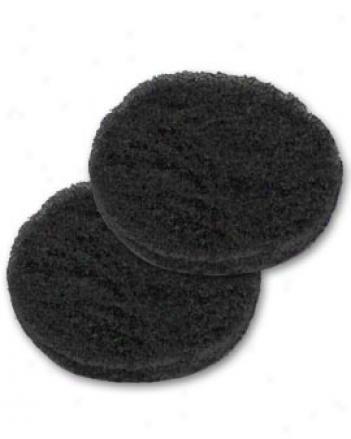
    Filters: My box came with 1 filter and I bought a pack of 3 more just so we'd have no excuse to stop composting. Usually, each bin will have a place to put the filter and so you have to make sure you're buying the right ones. And even though in the link a pack is around  $10, they last for 3-4 months each. And you can probably get them for cheaper on the web or w/ a Bed, Bath and Beyond or hardware store coupon. Also, they do, indeed, work. 

    - BioBag's Food Waste Bags: Oh, good ol' BioBag. Good for scooping cat and dog poo (NOT compostable). Good for lining your compost canister so it stays less icky. I got the Food Waste ones (~1 gallon) for around $7 at the hardware store, but it looks like you may be able to get them online for cheaper. We are looking into getting the 10-gallon bags to make a bigger compost

    A word of warning though, since the bags are compostable, they do start breaking down in the heat so if your compost is too hot, be careful taking the full bag out. 

    *NOTE: Not all "biodegradable" bags are compostable. Some are labeled as "biodegradable" because they are made of plastic w/ a chemical in them that helps them break down faster. These should NOT go in your compost b/c they're not made of plant matter. BioBags are made of corn so that's why they're compostablehere.

    Soooooooooooooo, that's all you really need to start off with. Since once you throw all your waste in a BioBag and dump it in the appropriate bin! And away it goes!

    I will try to get a guest writer here who actually goes through the whole process and uses the compost in her garden. And the next post will be about what is compostable and what is not. (If you're curious in the interim, check out The Compost Bin (in links on the right side) or Western Disposal's website.)  And eventually you'll get something that looks about like this!


    Friday, April 9, 2010

    Double Threat: Help the Environment & Yourself - AT THE SAME TIME!

    Ok, I realize that I owe y'all a blog post about consuming, but things have been really hectic since I've gotten back from New Orleans. (I also have another post I want to write on  New Orleans and plastic waste. But that'll be later. For now I'll try to tide you over with an article I found.  I'll sum up the article here, but will also past the link.  This article gives you some tips on how to live healthier and less wastefully. And hopefully will post again soon!

    Enjoy!


    *****
    One of the other topics that is near and dear to my own heart is our individual responsibility to  ourselves and our health, so my contribution for Blog Action Day is the following list of 3 simple ways to get healthy while saving the environment!

    1) Leave your car in the garage!
    I am not one of those people who thinks that cars are "bad" or that we shouldn't take advantage of the convenient as well as the fun aspects of having motorized vehicles. However, not to put too fine a point on it, but people have simply gotten lazy!

    Do you need to take your car somewhere that is more than a few miles away? Usually, yes. However, do you need to take your car to the store that is just a few blocks or even a mile from your house? No.
    Save money, lessen pollution, and get some exercise all at the same time by simply walking or taking a bicycle. What are you afraid of? That you'll work up a sweat? Good! Sweating is very healthy and all recent health studies point to the fact that elevating your heart rate for at least 20 to 30 minutes every day is not just a good idea, but that it could actually save your life.

    So, even if you don't care about the environment, why don't you put the car keys down, strap on some walking shoes, or just go grab your bike and work up a sweat. Do it every day, and before you know it, you will be losing weight, having a higher level of energy, saving money, and {GASP} – you might even enjoy it!

    2) Stop buying bottled water!
    This is one of the biggest "end around" health issues that I have ever seen. Many years ago, someone decided (rightfully so) that we all needed to be drinking more water. However, the need for us all to drink more water does NOT mean that we need to keep buying bottled water in plastic bottles!

    Pop Quiz: What is the one solitary substance that is physically impossible for the environment to break down?
    PLASTIC! All of the plastic that there ever was is still here on earth, and every time you buy a plastic water bottle and then throw it in your trash can, you are contributing to the problem. I don't have the facts and figures about how many of these plastic water bottles are sold every day, but I'm sure it is a staggering amount.
    Yes, you should drink water – and a lot of it. However, just buy one or two plastic drinking bottles that can be washed and refilled every day. If you need to buy three or four so that you always have plenty of water available, then do that. However, stop buying disposable plastic water bottles!
    Does the term "reduce, reuse, recycle" mean anything to you?

    Author's Note: There are also icky things in bottled water like e-coli, bacteria, choloroform and other fun stuff. Check out this study and the chart by the Natural Resources Defense Council (NRDC). I was going to do a whole post on bottled water...but maybe some other day.

    3) Eat fresh food instead of frozen food
    There is no real discussion needed about the fact that fresh food is more healthy for you than the packaged frozen food that people buy at the grocery store. There are innumerable health benefits associated with eating fresh food – especially fruits and vegetables.
    However, in addition to the instant and obvious health benefits, let's look once again at the issue that was just mentioned – plastic. What do those Lean Cuisine and Weight Watchers frozen meals come packaged in? Plastic. How are those types of meals heated up? In the microwave. Ah yes, the microwave – you know, that massively power draining box that sits on top of your counter, using as much electricity as a television set, if not even more?  And what are the ingredients in all of those frozen foods? Chemicals. Those chemicals – other than being nothing less than poison for your body – are manufactured in a factory somewhere. That factory is using massive amounts of energy and it is also polluting the environment on many different levels.
    By switching exclusively to fresh foods, you would:
    • Instantly increase your level of health 
    • Live longer
    • Stop putting more plastic into the environment
    • Help to put companies out of business that are polluting both our bodies and our planet
    Given the 3 simple ways to get healthy and save the environment that I just listed, what are your thoughts? Do they sound something like this?
    • I'm only one person, what can I do?
    • Saving only a few miles per day on my car won't make much of a difference
    • I don't have time to wash and reuse water bottles
    • My schedule doesn't allow me time to eat fresh foods
    If those are some of the responses that you have, then consider the following: Yes, you are only one person, but this is a collective effort. Imagine if a few BILLION people started making these efforts on a daily basis. If you save 2 miles per day on your car every day, that is over 700 miles every year. Even if your car gets 30 miles to the gallon, that is almost 25 gallons of gas pollution that you did not put into the environment – and that is only YOUR efforts over one year. Again, what if billions of people did that?

    You DO have time to wash and reuse bottles and other eating and drinking utensils. It is just inconvenient, so you don't want to do it. Everyone can find a way to fit fresh foods into their dietary lifestyle. Again, it may not be convenient to do so, but there is a way. You just have to ask yourself if your health and the health of the very planet that you live on is worthy of your efforts…

    Now that you have reached the end of this information about saving yourself and saving the environment at the same time, are you going to let it go in one ear and out the other, or are you going to take both personal and global responsibility and start making some changes?
    As you consider that, let me leave you with one more quote:
    "We are either part of the problem, or part of the solution." 


    ****


    Here's the article's Link:  http://www.todayisthatday.com/blog-action-day-3-simple-ways-to-get-healthy-while-saving-the-environment/#Maryanne%20Comaroto

    Wednesday, March 24, 2010

    Change the World Wednesday - Reduce Packaging!

    I got the title from a post I found on the Little Green Blog and since this is the reason why I started my blog I thought I'd post the tips from that site here and comment on how I'm doing with them.


    Tip 1). Ditch the plastic carrier bag
    Hopefully you’re all doing this already; but if not, why not treat yourself to a reusable bag this week? Find one you can keep in your bag, briefcase, car or pocket and set yourself the goal of remembering to use it. You might like an Onya bag which folds up inside itself and comes with a caribiner clip to attach to your belt loop, handbag or key ring. Or you might like to get a recycled bag, like these made from recycled rice sacks.

    Me: Yup, I'm working on this. See my post "How I learned to stop worrying and love my reusable bag."


    Tip2). Take your own container
    If you use a local butcher, fish market or deli counter, take your own lidded containers with you. When y0u make a purchase as them to put your goods into your own container. This can reduce your packaging by a massive amount.

    Me: I haven't done this yet, but I don't use a butcher/deli/fish market very often. I do buy stuff from the bulk bins and have been starting to save the plastic bags I get from there to reuse for the stuff later.


    Tip 3).  Buy in bulk
    If, for example, you buy one 5 litre container of fabric conditioner, the packaging weighs much less than five 1 litre containers. You’ll have to trust me on this - I’ve bought the goods and weighed them. I don’t remember the results now, but they were pretty impressive!

    Me: I never thought of this before but I do try to buy things in larger containers b/c it's also a better value. So I guess I'll try harder now. And again, I've started using the bulk bins at the grocery store, so I think that helps too!


    Tip 4).  Refills
    Refills are not as popular now as they used to be, but they do exist. In ASDA some stores refill their own label fabric conditioner. Bio D and Ecover have refill stations around the country at health food stores and organic farm shops.

    Me: I had no idea that this existed and I don't know if there are any around here, but it may be worth researching sometime. Has anyone heard of anything like this around the Boulder/Denver area? If so, please share!!


    Tip 5). Shop naked
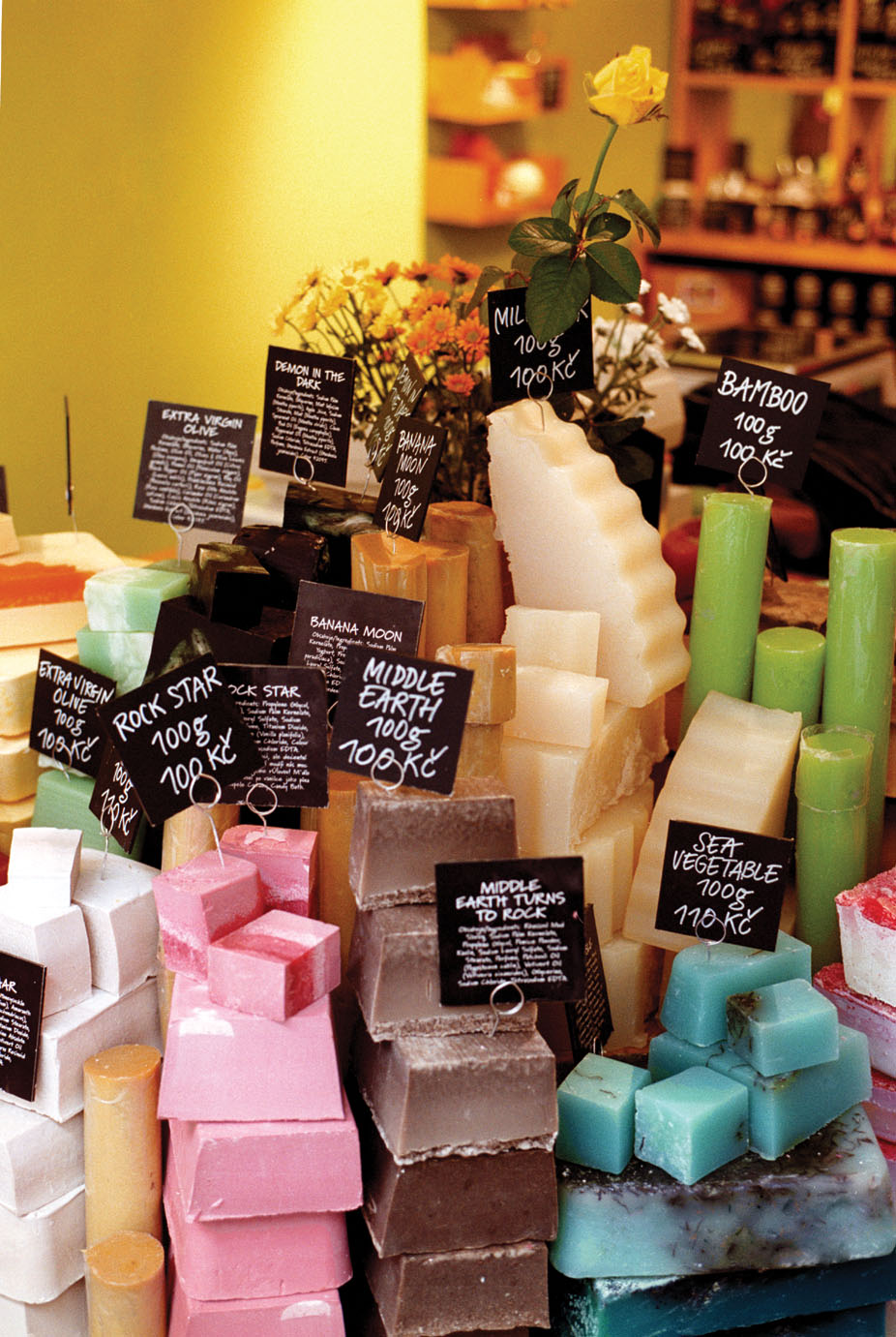
    Buy loose goods wherever possible; sign up for a box scheme or use a farmers market. Use a company like LUSH who sell soap and shampoo bars without packaging.

    Me. When I first read title of this tip I was like "WHOO-HOO! OH YEAH! Only in Boulder!" However, the author was obviously not implying that *I* shop naked (don't really know how that would help the environment anyway) but that I should buy good w/o packaging. I guess I can say that I do this w/ vegetables since I don't usually get bags to hold them in (unless they're really wet like lettuce or fragile like tomatoes). And I found recently that Ellie's Eco Home Store in boulder sells a 3-pack of mesh veggie bags for about $7.99. Which I definitely intend to buy soon. Also, we do have a Lush in Boulder on Pearl St. and I do love me some soap. Although, if you really get down to it, I could just make my own soap.  And I do also love me some summer farmer's market. CAN'T WAIT TILL SUMMER YEAH!
     

    Tip 6).  Returns
    When I was a child, many glass bottles has a 10p deposit on it. Alas this is no longer the case, but you can return your empties to Neals Yard and you’ll get something towards your next purchase. Elin at Nothing Nasty will accept your glass bottles for refilling and give you a huge 20% discount off your next purchase.

    Me: This tip makes me think that the author of this post is living in England. Unless America switched its currency and I didn't even notice....Again, I don't know much about doing this around here in America, but it would be worth researching. I do have a friend who makes bath stuff and lotions and she will give you a discount if you return her bottles/jars - check her out at Om Shanti Handicrafts!

    Here's the link in case the post title link is too complex for some: http://littlegreenblog.com/blog/green-news/reduce-packaging-waste-this-week/#more-2165.

    While writing this post I thought of a couple other ways to reduce packaging but haven't had a chance to do any extensive research on them yet. If anyone knows anything about these, again, don't be shy! Post away!


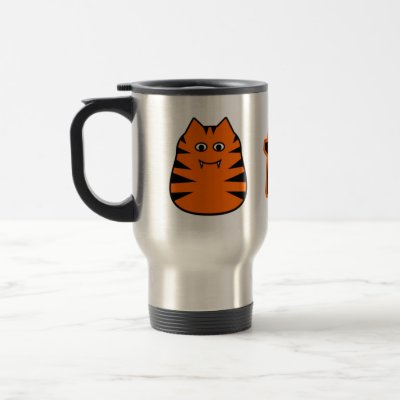
    7). Reusable mugs and cups would also be good way to reduce your waste. Also drinking/eating "for here" rather than "to go" at a restaurant. Some places will give you a ceramic mug or ceramic/reusable plastic dishes and silverware. (I want this cup, btw. It's totally cute!! I'm sure you're definitely seeing a trend in me putting cats into every single post?)


    8). One thing that I was wondering about is the packaging for children’s toys. My Honey's daughter got a lot of birthday presents this and each one was plastic wrapped in plastic. I would love to find a way to reduce this plastic waste. I’d also be open to the idea of recycling it, because at least that’s better than it going in the garbage. I was thinking Ebay might be a good place for kid’s toys, especially if you’re buying gently used toys. Then your child could still get the benefit of the latest toy and you can feel good about the lack or reduction of plastic you’re receiving. I also heard that it’s possible to make package-less purchases on Amazon (I think the dog bags I bought, while not corn starch, are just packaged in 1 cardboard box). Does anyone know anything about this?

    Anyway, I'd love to hear what YOU are doing to reduce your waste (eating less or holding it all day doesn't count!) so please post!

    Sunday, March 21, 2010

    Compostable Bags - How much is too much?

    On a side note, I'm going to try to title every post with some over-used catchphrase because I think people like that....or something.

    (I was hoping to save my compostable bag post for a time when I learned more about them, but I had an experience yesterday that needs attention)

    One of my ECO-goals is to go back to buying biodegradable bags instead of plastic shopping bags for scooping my cat litter. (And also using these for the trash can as well). Aside from being more eco-friendly, they also never have holes in them like 90% of grocery bags seem to. I was originally using BioBags that you can buy at Safeway, Sunflower Farmer's Market, McGuckins and other supermarkets or home-improvement stores.  These are slightly expensive at around $5.00-$7.00 for 30, though that is expected.  These come in a cardboard box, which can be recycled.

    Recently, I have noticed how many bags my boyfriend (we'll call him M.a.t.h - Man around the House) uses for picking up his dog's waste so I decided to check the Whole Pets store in my area (a store that specializes in all natural/sustainable/eco and pet-friendly food and accessories) to see if they had biodegradable bags in the little rolls.  I thought these would also be good for the cat litter, so we could kill two animals' poop with 1 kind of bag (as they say).   Well, whole pets does sell several different brands of these bags and I opted with Bags on Board.  They were more expensive than I would like at $14.99 for 120 bags (8 rolls) so I also bought a package of Pooch Pickup, 30ct for $3.99 that weren't in the rolls so were slightly cheaper.   

    When I opened up the box of Pooch Pickup here is what I found. YES! The BIODEGRADABLE bags were packaged in a presumably NON-BIODEGRADABLE plastic zip-bag. Why? It's not like these bags are food that will go stale if they're not sealed properly. What's the point in making biodegradable bags then store them in regular plastic?  Why couldn't they have made the bag holding the bags biodegradable? Or, why not just skip that whole step and store them in cardboard? At least that's recyclable.  Then as I started to think about it, the Bag on Board that I bought were also encased in plastic. I guess, maybe, if they are trying to let the consumer SEE what the product is, and since biodegradable products are not as strong as plastic products, then I can sort of understand the reason for the Bag on Board plastic. I guess the reasoning is "Well you're throwing away one plastic bag, but you're saving 120 plastic bags." Even so, I am thinking about writing the Pooch Pickup company and letting them know that they are going against their advertisement by using plastic at all.

    Interesting factoid: In doing research for this article I learned something very interesting about biodegradable bags. The Bag on Board and Pooch Pickup brands are actually two different kinds of biodegradble. I found an article on The Compost Bin that breaks it down (pun intended) in great detail, but I will sum up here. There are 2 kinds of "biodegradable" bags. One - Pooch Pickup/BioBags- is made of corn starch (no petrol products) and breaks down in around 180 days and is ok to throw in the compost. The other - Bag on Board - is an additive-based plastic bag which has a chemical that causes it to break down in 6 mos-2 years (vs. ~100 yrs or whatever) but release CO2 into the environment while doing so. The former seem to be the "good" kind whose only drawbacks are that they are not as strong or rugged as plastic and they may reduce the amount for consumption of the foods they're made from (corn/potatoes). The latter seem to be known as the "bad" kind because they're still made of plastic.

    HOWEVER.....thanks to Amazon.com, you can get 880 PURPLE bags on rolls for $23.93.  And the 120ct that I bought at Whole Pets for $14.99 goes for $7 on Amazon. Whereas, on PoopBags.com (not kidding about the name, check out the link!) you can get 480 BioBag dog bags for $82.99!!! Yikes. And double yikes. Especially when you have to pick up every single mess your dog makes individually.  My M.a.t.h. says he uses about 2/day  which equals 60 bags a month! That's 1/2 of the Bag on Board package (~$7), 2 Pooch Pickup boxes or 3 BioBag rolls, so roughly $8-$14.25/mo or $84-$171/year just on dog bags. Throw in use for cat litter boxes and you've got another 3-5 bags/week. That's A LOT of bags. Who has that kind of money?

    Well, after reading the reviews on Amazon, I went ahead and bought the 880 purple bags.  I figure that on my budget it's better to do this (for now) than not do anything.  Also after reading the reviews, I think more people need to be made aware of the difference between "biodegradable" and "compostable" because I would think that the Bag On Board bags WOULD NOT be good for a compost bin. (Though, I'm sure very few people put dog poo in their compost. Yuck.) I still believe that everyone should use these bags at least, and the starch ones if you feel you can afford it, because every little bit helps.

    I will, however, stick with BioBags when I start buying trash can bags and also if/when I start composting.  For dog and cat bags, though, the number of bags + the price + the still lessened impact on the environment still make these bags a win for me. And who knows? Maybe someday I'll be able to afford not only the corn starch bags but also an assistant who will pick up the poop for me. A girl can dream. ;-)