Showing posts with label energy. Show all posts

Monday, April 23, 2012

Honda's Smart Home System - The Future's Future

Wow.  Honda and renewable energy FTW.  Honda is testing out their Smart Home System (HSMS) that controls in-house energy while utilizing energy from solar and water power. It's got a "Smart e-Mix Manager" that reduces CO2 emissions and circulates energy through the home multiple times.  After reading the article, I still don't really understand how it will work but I think the gist here is:

This home is more efficient than your home is, can or will ever be in your lifetime.
This, peeps, is the future of the future..

If they can do THIS then a HSMS house should be a breeze, right? (I know you will agree just to finish this article and get this horrible image out of your retinal memory).

So go!  Read the article!  And be happy and environmental!

Sunday, April 22, 2012

Green Pug is More Environmental Than You

Happy Earth Day everyone!  And since I spent the entire day doing wedding invitations and not being particularly earth-friendly, here is Green Pug.  Go Green Pug!


Recycle that newspaper!  Change those CFL's! Gooooooo GreenPUg!

Wednesday, March 16, 2011

Update - Nuclear News in Japan

Fukushima Daiichi Before the 9.0 earthquake and tsunami on 3/11/11.
Wow, seems there's more interest in nuclear energy among my friends than I had thought. I have gotten all sorts of links and references so I thought that instead of editing my post from yesterday, I'd just write another one today.

First of all, I'm sure the thing that most people care about right now is the situation at the Japanese power plant Fukushima Daiichi. Now, I try not to get too much into politics because that is an environment (pun haha!) that I don't think I could pull my weight in, but I realize that my blog will move into hot-topic territory now and again and I'm going to be forced to address these problems from a position that's more political.

I guess this means that I'm going to have to get some things straight so as not to confuse my audience. I am, if it weren't obvious already, far more liberal on a lot of issues, maybe even most issues, and certainly on issues concerning the health of people and the environment. However, I realize that overly "liberal" people are just as bad as the "conservative" people they oppose, so I will try to at least be open to both sides of the argument.

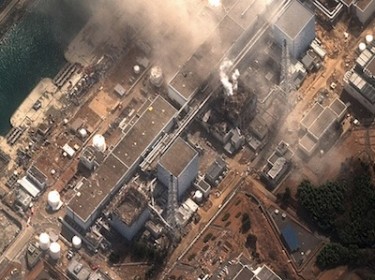
Damage to Fukushima Daiichi after the earthquake and tsunami on 3/11/11.


Ok so...Fukushima Daiichi.A lot of media sites seem to be blowing it out of proportion and there are all kinds of conflicting reports. From a practical standpoint, I want to say that the situation has gone a lot better than it could have for the power plant going through a 9.0 earthquake and a tsunami.

Here are a few articles that describe the nuclear situation as "better than it could've been":
1). http://tech.mit.edu/V131/N13/yost.html says:
"From the information we have, we can draw a conclusion anywhere between “the reactor is undamaged and being cooled” to “the reactor cladding and/or fuel has been partially damaged, but the damage is contained and the reactor is being cooled.” The question that should be asked now is whether the reactor has any future value as an electricity-producing asset. The widely-hyped possibility of some Chernobyl-like event is inconceivable without a new, catastrophic disaster. Coolant flow has been re-established and the public is in no danger. Given the magnitude of the precipitating event — a 9.0 earthquake — and the vast property damage it caused, the events at Fukushima are not a serious reason to re-evaluate our own nuclear policy in the United States."

An interesting thing I learned from this article is that the parts that blew off in the explosions in reactor 1 and 3 were the fourth "layer" of protection which was a drywall building not intended to actually contain anything. It seems like its job was to protect the workers from weather as they work around the containment vessel. So that means that the steel-and-concrete buildings could still be intact (the third layer of protection) and the steel container also (the second layer).


2). And http://www.theregister.co.uk/2011/03/14/fukushiima_analysis/page3.html:
"Radiation health effects have been pretty much zero. At times there have been heightened radiation levels inside the plants from short-life isotopes in the steam releases – sometimes enough that an unprotected person next to a reactor building might have sustained a year's normal dose from background radiation in an hour. This is not particularly terrifying, really – nobody is scared at the prospect of living another year on planet Earth – but it is being reported under scaremongering headlines. Another thing the weekend reporters have missed was the fact that all but tiny traces of the airborne radionuclides (from the salt in the seawater coolant) were disappearing before they could even cross the street; there is essentially no health hazard to people living nearby. Precautionary evacuations and tests were just that: precautionary."

3). The BBC is also saying about the same thing as these two articles above so at this point I'm still feeling confident in nuclear technology.


Reactor 1 after the explosion 3/12/11.

Tuesday, March 15, 2011

Powering Our World - Environmental Impact of Nuclear Power

Hi Guys!

Sorry it's taken me so long to post something, I'm currently taking a C++ class that is sucking up all of my time. However, this crisis in Japan has gotten me thinking about creating power and how that affects our environment. This is probably going to be very basic as I don't know much yet about the different types of power, but we've gotta start somewhere in talking about what we **know**.


So...The first form of power I wanted to look at is, of course, nuclear power. It seems there is a divide between whether it's safe or not and the impression I get is that it's a pretty big divide. Fun Fact: the US produces the most nuclear energy making up 19% of all its power output and has 140 nuclear power plants. Not surprising as we Americans are used to having the most of everything. ;-)  However, France produces most of it's electricity - 80% - with nuclear plants. Ouch.

Pro:
The pro-nuclear stance , argue that nuclear power produces a very low amount of air pollution that leads to greenhouse gasses or smog. That also makes it sustainable. Another pro argument is that the risks of storing waste are small and even smaller in light of new technologies in newer plants.

And, to be honest, nuclear safety is a trending pretty high on the positive with the only really big disaster being Chernobyl (so far). Though, if this power plant in Japan becomes a bigger disaster, I think that would be slightly different because they did suffer a 9.0 earthquake. I mean, c'mon...they also had oil refineries blowing up all over the place too. I don't think much would be safe from this type of threat. Though luckily, it's a rare occurrence.

Con:
The anti-nuclear view, conversely, asserts that nuclear power does pose serious human and environmental health risks. Transport, storage and disposal of nuclear waste is toxic and the contents can sometimes still be highly radioactive. Some argue that disposal of nuclear waste cannot be achieved 100% safely - with careless disposal polluting lakes, rivers, oceans and land. Lastly nuclear power plants are expensive to build which trickles down to make the energy actually rather expensive.

At this point, I am torn between supporting and condemning nuclear power. I mean, I have seen visible proof of what coal does (did) to buildings in Europe and older parts of America. I can't imagine putting all that black stuff out there wouldn't hurt the atmosphere so the prospect of nuclear power producing virtually no emissions, is attractive.

However, big accidents are just as bad, if not worse, as slow rates of pollution. You know...I can't really make a case against nuclear power right now. I just don't know enough and I can't really come up with a good alternative without doing more research.

Please weigh in with your thoughts. =)
 
I wanted to post a video talking about nuclear power but the only one I've found so far is a Fox News one and I just can't stand behind the quality of their broadcasting. So, if anyone knows of a good one, please let me know!

Monday, January 10, 2011

Lucky #7 - 7 things to reuse, 7 things to avoid

I just found this site called Greenopolis and while I haven't explored it fully, I found two fun and useful articles for the time being.

#1:

The Magnificent Seven: 7 Top Materials To Use And Recycle!


For millennia we used leather, wood, clay, and stones along with animal and vegetable materials for nearly everything. When we threw something “away”, it went away- really back into the natural systems it came from.

But 7 billion of us can’t rely strictly on grown materials, and most of our modern materials don’t go away very easily. Does that mean we should not use them? Not at all. We just need to get as smart as Ma Nature and learn to reuse and recycle those materials again and again. These Top 7 materials are safe, recyclable and just work really well for so many things. They include 2 metals, 3 plastics, and 2 natural materials. Here’s my list:
  1. Steel. Steel is probably the most recycled material on earth- about 70 % of all steel is recycled and nearly all the steel you use has recycled steel in it. Works great because of its strength and malleability. I’m a big fan of steel roofs, among other things.

  2. Aluminum. Abundant in nature, strong but lighter than steel, and it doesn’t rust. Aluminum is what caps the Washington Monument because it was once so prized. But mining and smelting aluminum is very energy intensive and polluting. That’s why recycling it is so important. Right now about 50% is recycled- we need to get that up into the 90% range like gold.

MORE...

What I want to know about this article is how it mentions recycling bottle lids. If anyone knows how to do that or can point me in the right direction, I'd be grateful! Sometime soon I will research this myself.


#2


7 Deadly Sins: 7 Materials To Avoid

In the Church Of Green Living, some sins are more deadly than others.


Little sins like forgetting to recycle paper can be overlooked, unless you are a newspaper publisher. But some are to be avoided at all costs. Here’s a list of 7 substances that cause real problems in the environment, and that we can avoid by taking a few simple steps in our lives.


  1. 2Polyvinyl Chloride, aka PVC, aka Vinyl aka #3 plastic. We’ve all got some vinyl in our houses, on furniture clothing, plumbing pipes- it’s the third most common plastic. But it usually has bad stuff that can leach out of it, like diethylhexyl phthalate, which is banned in Europe, vinyl chloride and dioxins.  The U.S. Green Building Council states that the "risk of dioxin emissions puts PVC consistently among the worst materials for human health impacts”.  You probably don’t have to strip off your vinyl siding, but avoid toys (including sex toys) with PVC. You don’t want it in or near you or your kid’s body.
  2. 2Polystyrene, aka Styrofoam, aka #6 plastic. Polystyrene is not easily recycled because of its light weight (especially if foamed) and its low scrap value. Discarded polystyrene does not biodegrade for hundreds of years. Commonly used in coffee cups and clamshells for food, it contains benzene, a known carcinogen, and while the FDA claims it is safe, there are studies concerning polystyrene containers used for food packaging which find that styrene oligomers migrate into the food and may increase thyroid hormone levels. It’s your call if you want your hot coffee or entrĂ©e served up in polystyrene. I avoid it.
MORE...

In this article it's these first two that bother me the most.  Partially for their poisoning rap but also (and, let's face it, MOSTLY) for the fact that I'm so good about not throwing away all kinds of other stuff, including stuff that breaks down faster (food --> composting) but I still get styrofoam take out containers and plastic crap off of the kid's toys. I think my next big goal is going to be to figure out how to cut back on using these items. NO STYROFOAM! grrrr....

Wednesday, December 22, 2010

Green Car Report

In the market for a new car? Here's a site that tells you all about eco-friendly cars. The Green Car Report talks about specific cars that are better for the environment and all the components of driving more green!

Here's a sample article:

Ding-Ding-Ding! Electric Cars Likely To Be Made Noisier By Law

December 20th, 2010

In one particularly hilarious scene in the TV show Weeds, Mary-Louise Parker’s soccer mom/drug dealer character inspires a scary drug lord to buy several Toyota Priuses after he successfully carries out a drive-by shooting while riding in hers.  The selling point? The quietness of the hybrid. “Good for sneaking up on mother******s,” he cackles. 

That might no longer be the case with a piece of legislation that recently passed the Senate and looks to be cleared for approval in the House. The Pedestrian Safety Enhancement Act would require electric cars and hybrids to make noise, and would fund the Department of Transportation to create a set of rules for automakers, who would be allowed some leeway in how they carry out the guidelines. Green cars like the Prius don’t make noise when running off their batteries. Whether you have an armed drug dealer as an enemy or (more likely) happen to cross the street without looking, hybrids are more likely to hit you than regular cars, especially when operating at low speeds when gas engines aren’t engaged, according to a study by the National Highway Traffic Safety Administration. All-electric vehicles like the 2011 Nissan Leaf could be even more of a threat. Of particular concern was the potential danger to blind pedestrians. But researchers and writers have also challenged that study, saying the methodology was flawed. Read More....


Friday, December 3, 2010

Green Holiday Tips

IT'S CHRISTMASTIME! Ok, well, at least I'm trying to psyche myself up for the Holidays even though I'm guessing this year I'll probably get coal (getting older is a bitch) and only a couple people have RSVP'd to my White Elephant Gift party =(. However, what I'm still psyched about is being green and luckily, green is one of the colors of Christmas! So here are some tips courtesy of the Denver Zoo and modified by me. Did you know that the Zoo is doing it's part to be green this year by using all LED lights in their Zoo Lights display? LED lights use 1% of the energy of traditional lights and 10% of the energy of little lights.  Also, if you guys are local, definitely check this out...it's going to be AWESOME!

Denver Zoo Lights!

Go green this year for Christmas
Your Christmas Tree
  • After the holidays, don’t just throw your tree away- Recycle it! Denver Recycles offers free pick up of your Christmas tree.  Visit their website, www.recycleyourchristmastree.com, for specific rules and regulations regarding when and how to have your tree picked up.  They list tree pick up by county to make it easy for anyone in Colorado to recycle their tree. (out-of-staters check for something like this in your area!)
  • Instead of purchasing new ornaments this year for trimming your tree, try edible or compostable items like popcorn or cranberries on a string, gingerbread cookies or items made from recycled objects around your home.
  • Or...get a fake tree! Reuseable every year!


Your Holiday Decor

  • Purchase holiday lights made with energy-saving, light-emitting diodes, or LEDs. LEDs use only a fraction of the energy of conventional bulbs and are much better for the environment. LEDs use only about one percent of the power of standard (C7) holiday lights, and about 10 percent of the power in mini-lights. Try www.environmentallights.com
  • Get outdoor light strands that are wired in parallel. These have separate circuitry so that if one bulb blows out the rest will keep shining; all you have to do is replace the bulb rather than the entire strand of lights. Strands sold with series wiring stand or fall together, making it almost impossible to find and replace a single blown-out bulb.

Sending Your Holiday Cards

  • Send E-Cards and you will not waste a single tree.
  • Send cards made of 100 percent recycled paper or tree-free cards made by environmental organizations. In addition to "tree free" cards, you can get cards made of old subway maps, cards made of recycled junk mail, and cards that you can plant which are imbedded with a seed mixture that will grow in the spring.
  • Glue pictures from old cards onto homemade or store-bought recycled paper to create new cards.Yay crafty!
  • Glue pretty paper on the inside of old cards to cover previous writing--and send them again.
  • Avoid cards with glossy, shiny or gold foil coatings since these cannot be recycled. Look for the PCF label on cards (Processed Chlorine Free) -- they're printed on unbleached paper.
 
What to Buy During Your Holiday Shopping

  • Try making something for those that you love.  People love to get homemade cookies, fudge, bread, or jam
  • Other gifts that will create little to no waste include things like concert or movie tickets, a gift certificate for dinner, or an IOU for services such as a massage, cooking a meal, or baby sitting.
  • Planting a tree is great because you can do it together.
  • Make it a contest for your kids to see how many old toys they can come up with to donate to a local charity; and then the one who collects the most wins a prize.
  • Give someone a gift that keeps on giving, such as a live plant or a donation to Denver Zoo or other local charity to support worldwide conservation projects or the construction of the Asian Tropics exhibit for endangered Asian elephants. 
  • Gifts that don’t require batteries are a great alternative and don’t create as much waste when having to dispose of and replace these batteries.  Try also to look for gifts that are made from recycled materials.
  • Best of all, adopt an animal at Denver Zoo or give a Denver Zoo Membership (or your local zoo)  in someone's name.  Your friends and family will think of you every time they visit!
  • Also, shop on Ebay. There's a lower chance of the toys and stuff being "new in box" which will cut down on all the plastic waste that cannot be recycled.

Wrapping Your Gift

  • Try using colorful pages torn from magazines or last year's calendar pictures to wrap small gifts, and old maps, posters or the Sunday comics for larger boxes.
  • Use crayons or sponge paint to decorate brown grocery bags and wrap with natural raffia ribbon.
  • Reusable cloth ribbons can be used in place of plastic bows or you can save bows and reuse year after year. I swear, my mom has bows from when I was like 5!!
  • Avoid using paper entirely by using reusable decorative tins, baskets or boxes, fabric bags (canvas grocery bags are great!)or give a gift in a gift.
  • Un-wrap gifts carefully and save wrappings for reuse next year.
  • Use old scraps of wrapping paper or cut up old cards to make gift tags.
  • If you do buy wrapping paper, look for ones made of recycled paper. Avoid conventional wrapping paper with metallic colors. Such paper is often produced in an environmentally unfriendly manner.
  • If you have wrapping paper left over from last year and want to have different paper for this year’s presents exchange it with a friend, co-worker or family member’s paper from last year and you will both have “new” paper.<-- I like this idea a lot b/c I get bored of things easily!

Gift mailing

  • You can re-use packing peanuts. Call the peanut hotline at (800) 828-2214, for locations of mailing centers that reuse the packing peanuts or go to www.loosefillpackaging.com. If there is no location in your community, check with local gift or craft shops, artists galleries or elementary school art programs for reuse opportunities.Great idea! I didn't know this but will try for the future.
  • Use corrugated boxes. More than 70% of corrugated cardboard is recovered and recycled into new boxes and paper products. The fibers from one corrugated box can have up to seven or eight lives. Breakdown and flatten your boxes for easier transporting before taking them to your local recycling center. If you do not have a center available, check with a local grocer or department store to see if they will bale your cardboard in their in-house recycling program.
  • Shred your old catalogs to make great packing material when mailing gift packages. 
  • Reuse tissue paper from clothing store purchases as packing material or gift paper.

Holiday Parties

  • Use "real" dishes, cups, and utensils that you can wash and reuse year after year.
  • Switch to cloth napkins.
  • Make it easy for your guests to recycle bottles and cans.
  • If you must use disposables, buy napkins and plates made from recycled material. Try www.biodegradablestore.com
  • Get corn-made cups and utensils which can be composted afterward. And if you don't have compost, at least if you throw them away, they'll break down faster than plastic!
  • Serve sustainable seafood and fish.  Check out Monterey Bay Aquarium’s Seafood Watch page, www.mbayaq.org/cr/seafoodwatch.asp, for consumer guides and more.
  • Serving local organic food at your parties will help to protect the environment because organic products don’t require pesticides and local food doesn’t have to travel far, creating more carbon emissions, to get to your table.
  • You can make a difference just by being aware of the ingredients you are using in preparing holiday foods.  For instance, palm oil or palmitate is included in many of the foods that we eat and the harvesting of palm oil in Indonesia contributes to the destruction of critical habitat for endangered orangutans and Asian elephants.