Showing posts with label health. Show all posts

Wednesday, March 16, 2011

Update - Nuclear News in Japan

Fukushima Daiichi Before the 9.0 earthquake and tsunami on 3/11/11.
Wow, seems there's more interest in nuclear energy among my friends than I had thought. I have gotten all sorts of links and references so I thought that instead of editing my post from yesterday, I'd just write another one today.

First of all, I'm sure the thing that most people care about right now is the situation at the Japanese power plant Fukushima Daiichi. Now, I try not to get too much into politics because that is an environment (pun haha!) that I don't think I could pull my weight in, but I realize that my blog will move into hot-topic territory now and again and I'm going to be forced to address these problems from a position that's more political.

I guess this means that I'm going to have to get some things straight so as not to confuse my audience. I am, if it weren't obvious already, far more liberal on a lot of issues, maybe even most issues, and certainly on issues concerning the health of people and the environment. However, I realize that overly "liberal" people are just as bad as the "conservative" people they oppose, so I will try to at least be open to both sides of the argument.
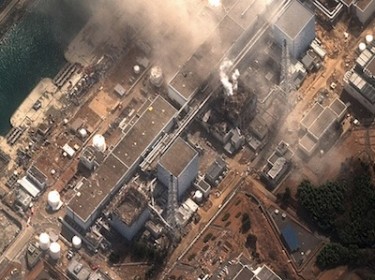
Damage to Fukushima Daiichi after the earthquake and tsunami on 3/11/11.


Ok so...Fukushima Daiichi.A lot of media sites seem to be blowing it out of proportion and there are all kinds of conflicting reports. From a practical standpoint, I want to say that the situation has gone a lot better than it could have for the power plant going through a 9.0 earthquake and a tsunami.

Here are a few articles that describe the nuclear situation as "better than it could've been":
1). http://tech.mit.edu/V131/N13/yost.html says:
"From the information we have, we can draw a conclusion anywhere between “the reactor is undamaged and being cooled” to “the reactor cladding and/or fuel has been partially damaged, but the damage is contained and the reactor is being cooled.” The question that should be asked now is whether the reactor has any future value as an electricity-producing asset. The widely-hyped possibility of some Chernobyl-like event is inconceivable without a new, catastrophic disaster. Coolant flow has been re-established and the public is in no danger. Given the magnitude of the precipitating event — a 9.0 earthquake — and the vast property damage it caused, the events at Fukushima are not a serious reason to re-evaluate our own nuclear policy in the United States."

An interesting thing I learned from this article is that the parts that blew off in the explosions in reactor 1 and 3 were the fourth "layer" of protection which was a drywall building not intended to actually contain anything. It seems like its job was to protect the workers from weather as they work around the containment vessel. So that means that the steel-and-concrete buildings could still be intact (the third layer of protection) and the steel container also (the second layer).


2). And http://www.theregister.co.uk/2011/03/14/fukushiima_analysis/page3.html:
"Radiation health effects have been pretty much zero. At times there have been heightened radiation levels inside the plants from short-life isotopes in the steam releases – sometimes enough that an unprotected person next to a reactor building might have sustained a year's normal dose from background radiation in an hour. This is not particularly terrifying, really – nobody is scared at the prospect of living another year on planet Earth – but it is being reported under scaremongering headlines. Another thing the weekend reporters have missed was the fact that all but tiny traces of the airborne radionuclides (from the salt in the seawater coolant) were disappearing before they could even cross the street; there is essentially no health hazard to people living nearby. Precautionary evacuations and tests were just that: precautionary."

3). The BBC is also saying about the same thing as these two articles above so at this point I'm still feeling confident in nuclear technology.


Reactor 1 after the explosion 3/12/11.

Tuesday, March 15, 2011

Powering Our World - Environmental Impact of Nuclear Power

Hi Guys!

Sorry it's taken me so long to post something, I'm currently taking a C++ class that is sucking up all of my time. However, this crisis in Japan has gotten me thinking about creating power and how that affects our environment. This is probably going to be very basic as I don't know much yet about the different types of power, but we've gotta start somewhere in talking about what we **know**.


So...The first form of power I wanted to look at is, of course, nuclear power. It seems there is a divide between whether it's safe or not and the impression I get is that it's a pretty big divide. Fun Fact: the US produces the most nuclear energy making up 19% of all its power output and has 140 nuclear power plants. Not surprising as we Americans are used to having the most of everything. ;-)  However, France produces most of it's electricity - 80% - with nuclear plants. Ouch.

Pro:
The pro-nuclear stance , argue that nuclear power produces a very low amount of air pollution that leads to greenhouse gasses or smog. That also makes it sustainable. Another pro argument is that the risks of storing waste are small and even smaller in light of new technologies in newer plants.

And, to be honest, nuclear safety is a trending pretty high on the positive with the only really big disaster being Chernobyl (so far). Though, if this power plant in Japan becomes a bigger disaster, I think that would be slightly different because they did suffer a 9.0 earthquake. I mean, c'mon...they also had oil refineries blowing up all over the place too. I don't think much would be safe from this type of threat. Though luckily, it's a rare occurrence.

Con:
The anti-nuclear view, conversely, asserts that nuclear power does pose serious human and environmental health risks. Transport, storage and disposal of nuclear waste is toxic and the contents can sometimes still be highly radioactive. Some argue that disposal of nuclear waste cannot be achieved 100% safely - with careless disposal polluting lakes, rivers, oceans and land. Lastly nuclear power plants are expensive to build which trickles down to make the energy actually rather expensive.

At this point, I am torn between supporting and condemning nuclear power. I mean, I have seen visible proof of what coal does (did) to buildings in Europe and older parts of America. I can't imagine putting all that black stuff out there wouldn't hurt the atmosphere so the prospect of nuclear power producing virtually no emissions, is attractive.

However, big accidents are just as bad, if not worse, as slow rates of pollution. You know...I can't really make a case against nuclear power right now. I just don't know enough and I can't really come up with a good alternative without doing more research.

Please weigh in with your thoughts. =)
 
I wanted to post a video talking about nuclear power but the only one I've found so far is a Fox News one and I just can't stand behind the quality of their broadcasting. So, if anyone knows of a good one, please let me know!

Wednesday, October 27, 2010

R-E-C-Y-C-L-E According to Rocko

The other day, I was reminded of a song about the environment from Rocko's Modern Life, one of the cartoons I watched as a kid. This was probably done in the mid- to late 90s, before even Boulder did city-wide composting. It is extremely catchy and to this day I have the chorus memorized:

You need to R-E-C-Y-C-L-E, recycle!
And C-O-N-S-E-R-V-E, conserve!
And don't P-O-L-L-U-T-E, pollute the river, sky or sea
Or else you're gonna get what you deserve!

So now, please join me and Captain Compost Heap in this fun and responsible little ditty! (You now know the chorus, so no excuse not singing along!).

Wednesday, October 20, 2010

Thinking About Water

In the past few days, I've been thinking a lot about water. It started a few months ago when I read a glamour article about the grandaughter of that great sea explorer whose name I've forgotten. But she is a water activist now and is trying to teach people how to conserve water.It encouraged me to keep doing what I've been doing as far as pouring leftover drinking water (glasses of water etc) into my plants or the cat/dog bowl, but didn't really take hold of my thoughts. It was striking to me, however, and led me to muse about it now and again.

Then, yesterday, I read some articles about people in New Delhi around the Yamuna river who are upper-middle and middle class and don't even have consistent running water (even though they have pipes). 20-40% of New Delhi's water is lost from leakage due to poor pipe construction and old pipes. This woman has to be even more careful with her water usage and consistently reuses it for other things. She also pays over $45 US dollars (a week?) for 3 different sources of water - running water bill, tanker truck and neighborhood drilled well. She talked about how after she wakes up at 6a.m. she spends her day worrying about how she's going to get water that day.

Then you've got all the lower-middle and lower classes who have no access to running water. The women have to spend their days waiting for water tankers and fighting over water. One woman had to quit her job just so she could wait for water. And even then, a lot spills out into the streets from people filling their jugs. Not to mention the fact that they have open sewers flowing down their streets with unprocessed human waste in them. There are not enough treatment plants to process waste and also little to no restriction on dumping waste in rivers. All this stuff flows down into the Yamuna river, the river that New Delhi was founded on and, ironically, is still considered sacred and holy.  However, this river is pretty much a sewer itself with clumps of waste floating in it and methane bubbles coming from the surface.Despite this, people still bathe, wash clothes, play and work in it. A lot of children a year die from diarrhea and other feces-related deaths before the age of 5. But a lot of those people have no choice. 
Waste from New Delhi pouring into the Yamuna River 

But this is not unique to India.  One blogger talks about how stuff like this is even done in more modern countries like Spain making it risky to drink from the rivers there as well. (I got the picture at the beginning from his blog).  He states facts like "More than 800 million human beings don't have access to safe drinking water of any type, and more than 2.000 million people don't have access to water for sanitation purposes."

So, yeah, water is scarce, they've been telling us that for years, right? Well, right but that doesn't mean that we, in America, can't do something to help. Now I don't really know where our water comes from or goes (water tables and all that) but I do know that even though Colorado has gone through "droughts" we still have water coming out of our taps, our showers and our sprinklers. So the parks had to stop watering their very thirsty Kentucky blue grass? Who cares! We still are waaay luckier than most countries.

Now this is what I'm thinking:  why don't we work on conserving water as well? I know it'll be hard for y'all to give up your 20 minute long showers and that impossibly green lawn, but I think that if we at least cut back in a few ways, it will help. I have thought of some great ways to reduce your water consumption.

1). Don't throw water down the sink! You're finished with that glass of water and you've let it sit there for a few days.  I know that it will taste kinda gross now and I'd rather have a fresh one. But you know who doesn't care? The plant, that lawn, and the dog. Pour the water in there instead.

2). Try to do the 20 minutes showers only on weekends or special-occasion days. I think 7 minutes is what the experts say, but I would time myself to see how long it takes. If you feel that it takes you way to long for your normal routine, think about ways you can cut back. Like, I used to turn off the water when I shaved my legs and after a while I got lazy and stopped. (and I intend to start again, you hecklers!)

3). Make your loads of laundry as full as possible because fewer large loads take less water than many small ones (I read this somewhere, can't remember where now). 

4). Run the water lightly when hand-washing dishes instead of on full tilt. Only use that setting if you need the pressure for the spayer or something.

5). This one is for you PUBLIC WORKS people and BUSINESSES - don't water the grass when it's raining. I mean WTF? Really? I know we, like, NEVER get rain here but seriously. When we do, we should make use of it. Is there some sort of rain meter that can automatically shut of sprinklers when it rains? If there is, everyone should install one.

6). Maybe we could even get really crazy and use small buckets of water to wash and rinse sponges when cleaning counters and stuff? Then only run the water for the final wash....This may not work but I think I'll try it.

7). Ok, seriously, why do medians here have grass on them? Who the F cares about medians? Put some nice rocks or pretty local plants there instead, then you wouldn't have to waste water on something that a person's going to see for less than 5 minutes. 

Ok, this post is getting really long so I'll stop here. I'm sure I've missed stuff, so please post your water-saving strategies. But whatever you do, please keep thinking about water! C'mon ppl!

Friday, April 9, 2010

Double Threat: Help the Environment & Yourself - AT THE SAME TIME!

Ok, I realize that I owe y'all a blog post about consuming, but things have been really hectic since I've gotten back from New Orleans. (I also have another post I want to write on  New Orleans and plastic waste. But that'll be later. For now I'll try to tide you over with an article I found.  I'll sum up the article here, but will also past the link.  This article gives you some tips on how to live healthier and less wastefully. And hopefully will post again soon!

Enjoy!


*****
One of the other topics that is near and dear to my own heart is our individual responsibility to  ourselves and our health, so my contribution for Blog Action Day is the following list of 3 simple ways to get healthy while saving the environment!

1) Leave your car in the garage!
I am not one of those people who thinks that cars are "bad" or that we shouldn't take advantage of the convenient as well as the fun aspects of having motorized vehicles. However, not to put too fine a point on it, but people have simply gotten lazy!

Do you need to take your car somewhere that is more than a few miles away? Usually, yes. However, do you need to take your car to the store that is just a few blocks or even a mile from your house? No.
Save money, lessen pollution, and get some exercise all at the same time by simply walking or taking a bicycle. What are you afraid of? That you'll work up a sweat? Good! Sweating is very healthy and all recent health studies point to the fact that elevating your heart rate for at least 20 to 30 minutes every day is not just a good idea, but that it could actually save your life.

So, even if you don't care about the environment, why don't you put the car keys down, strap on some walking shoes, or just go grab your bike and work up a sweat. Do it every day, and before you know it, you will be losing weight, having a higher level of energy, saving money, and {GASP} – you might even enjoy it!

2) Stop buying bottled water!
This is one of the biggest "end around" health issues that I have ever seen. Many years ago, someone decided (rightfully so) that we all needed to be drinking more water. However, the need for us all to drink more water does NOT mean that we need to keep buying bottled water in plastic bottles!

Pop Quiz: What is the one solitary substance that is physically impossible for the environment to break down?
PLASTIC! All of the plastic that there ever was is still here on earth, and every time you buy a plastic water bottle and then throw it in your trash can, you are contributing to the problem. I don't have the facts and figures about how many of these plastic water bottles are sold every day, but I'm sure it is a staggering amount.
Yes, you should drink water – and a lot of it. However, just buy one or two plastic drinking bottles that can be washed and refilled every day. If you need to buy three or four so that you always have plenty of water available, then do that. However, stop buying disposable plastic water bottles!
Does the term "reduce, reuse, recycle" mean anything to you?

Author's Note: There are also icky things in bottled water like e-coli, bacteria, choloroform and other fun stuff. Check out this study and the chart by the Natural Resources Defense Council (NRDC). I was going to do a whole post on bottled water...but maybe some other day.

3) Eat fresh food instead of frozen food
There is no real discussion needed about the fact that fresh food is more healthy for you than the packaged frozen food that people buy at the grocery store. There are innumerable health benefits associated with eating fresh food – especially fruits and vegetables.
However, in addition to the instant and obvious health benefits, let's look once again at the issue that was just mentioned – plastic. What do those Lean Cuisine and Weight Watchers frozen meals come packaged in? Plastic. How are those types of meals heated up? In the microwave. Ah yes, the microwave – you know, that massively power draining box that sits on top of your counter, using as much electricity as a television set, if not even more?  And what are the ingredients in all of those frozen foods? Chemicals. Those chemicals – other than being nothing less than poison for your body – are manufactured in a factory somewhere. That factory is using massive amounts of energy and it is also polluting the environment on many different levels.
By switching exclusively to fresh foods, you would:
  • Instantly increase your level of health 
  • Live longer
  • Stop putting more plastic into the environment
  • Help to put companies out of business that are polluting both our bodies and our planet
Given the 3 simple ways to get healthy and save the environment that I just listed, what are your thoughts? Do they sound something like this?
  • I'm only one person, what can I do?
  • Saving only a few miles per day on my car won't make much of a difference
  • I don't have time to wash and reuse water bottles
  • My schedule doesn't allow me time to eat fresh foods
If those are some of the responses that you have, then consider the following: Yes, you are only one person, but this is a collective effort. Imagine if a few BILLION people started making these efforts on a daily basis. If you save 2 miles per day on your car every day, that is over 700 miles every year. Even if your car gets 30 miles to the gallon, that is almost 25 gallons of gas pollution that you did not put into the environment – and that is only YOUR efforts over one year. Again, what if billions of people did that?

You DO have time to wash and reuse bottles and other eating and drinking utensils. It is just inconvenient, so you don't want to do it. Everyone can find a way to fit fresh foods into their dietary lifestyle. Again, it may not be convenient to do so, but there is a way. You just have to ask yourself if your health and the health of the very planet that you live on is worthy of your efforts…

Now that you have reached the end of this information about saving yourself and saving the environment at the same time, are you going to let it go in one ear and out the other, or are you going to take both personal and global responsibility and start making some changes?
As you consider that, let me leave you with one more quote:
"We are either part of the problem, or part of the solution." 


****


Here's the article's Link:  http://www.todayisthatday.com/blog-action-day-3-simple-ways-to-get-healthy-while-saving-the-environment/#Maryanne%20Comaroto